


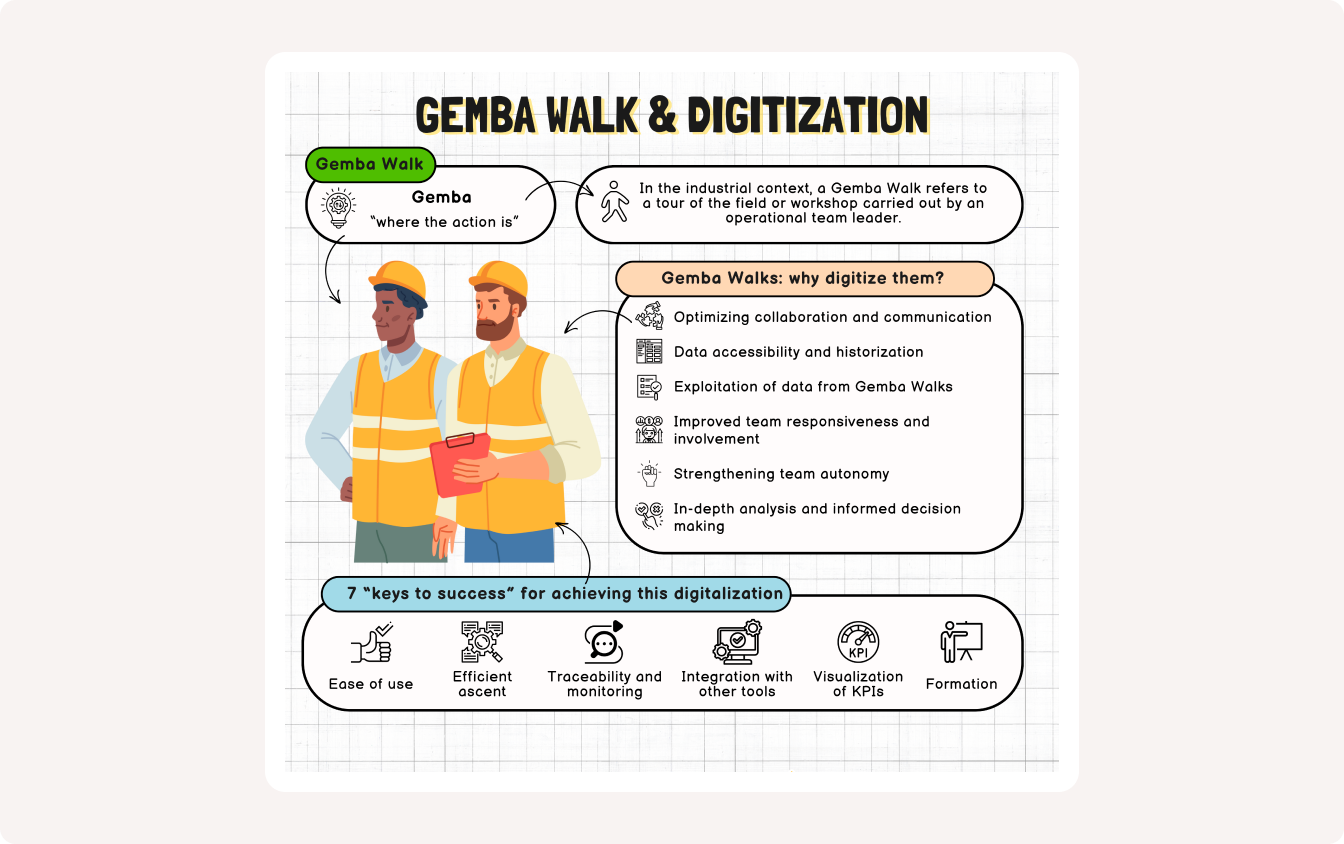
In the industrial sector, as we know, operational efficiency is paramount. To achieve this efficiency, it’s necessary to improve processes, which means understanding the root causes of problems.
The solution? Gemba Walks. Stemming from the lean philosophy, they have become an essential tool for managers wishing to keep in touch with the field and understand the “real causes”. In this article, we explore why and how to digitize Gemba Walks, while preserving their essence: human contact with operational teams.
One of the major advantages of digitalization is the ability to keep a detailed history of Gemba Walks. This traceability not only provides an overview of how processes are evolving, but also enables action plans to be adjusted more precisely and efficiently.
For sectors subject to frequent regulatory audits, such as the agri-food or aeronautics industries, this digital archiving can prove particularly valuable.
Recording data from routines enables us to directly calculate the performance indicators (KPIs) we wish to track, which can then be monitored via dashboards. You can then easily update the status, progress or score of audits and field tours daily.
What’s more, you can export the history of responses given during routines performed by your teams, for customized analyses.

© iObeya 2014-2025 All rights Reserved
Your guide to Manufacturing, Operational Excellence, Continuous Improvement
& much more.
Sign up now for our must-attend annual event... with exclusive new features in store!