
What is a Porter’s 5 forces analysis?
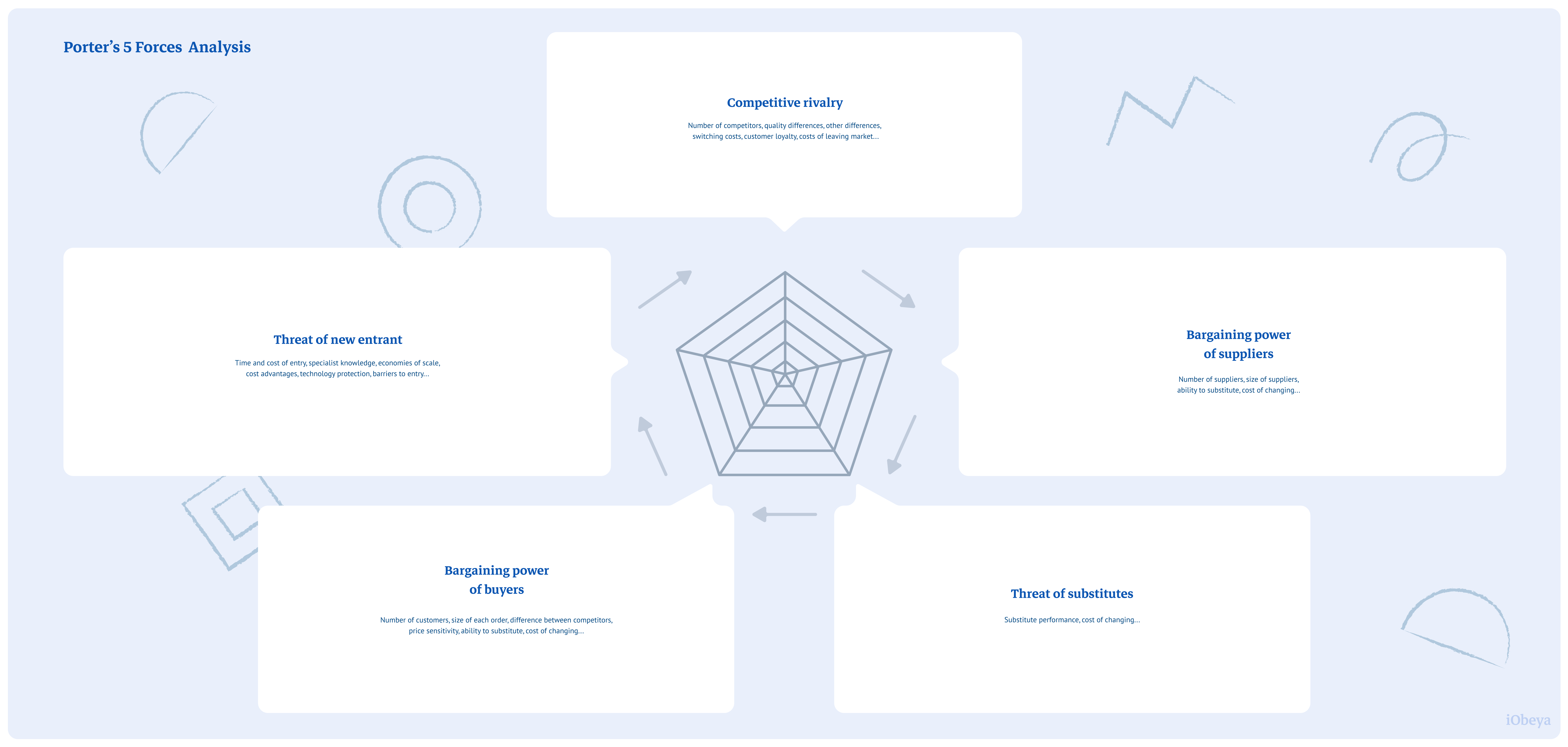
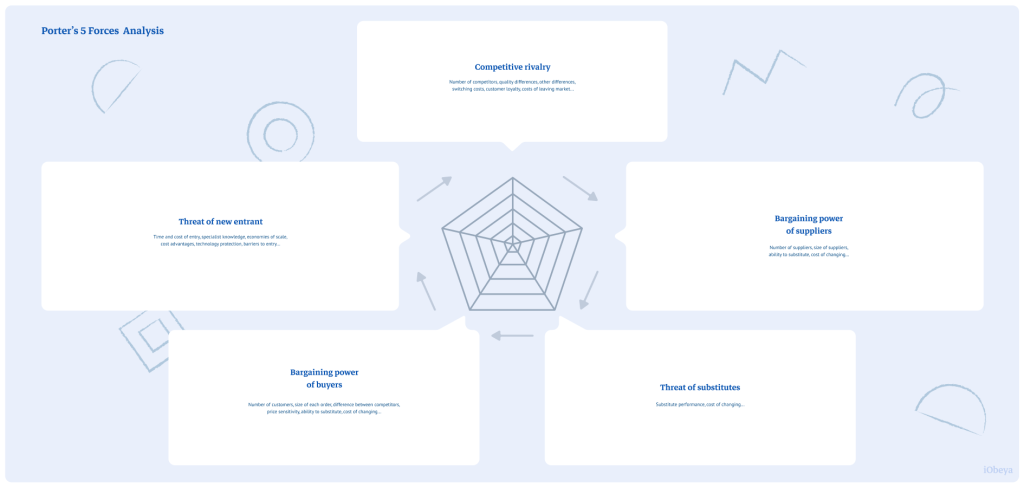
First published in the book “Competitive Strategy” by Michael E. Porter, Porter’s 5 Forces Analysis Model is a retrospective tool used to define strengths and weaknesses in a market in order to competitively strategize and mitigate threats. To perform its analysis, this tool studies 5 competitive forces that determine the intensity of competition in an industry:
- Rivalry Among Existing Competitors
- Threat of New Entrants to the Market
- Bargaining Power of Suppliers
- Bargaining Power of Customers
- Threat of Substitute Products or Services
Each element must be addressed in depth. Once this is done, you must synthesize the important points in order to define the competitive environment in a market.
Why is a Porter’s 5 forces analysis used?
This analysis is used to establish a company’s strategy, particularly its commercial strategy to increase profitability and longevity. Companies looking for a larger vision of the competitive environment of a market find a strong utility in the use of this analysis. This model allows them to understand the threats and advantages of a company in a market. This gives the company that uses this analysis the possibility to better position itself.
Who uses a Porter’s 5 forces analysis?
Anyone seeking to analyze the competitive environment of a market can find value in implementing a Porter’s 5 forces analysis, no matter the sector or department. The model is widely used in business strategy and planning, market research, and investment analysis.
How to set up a Porter’s 5 forces analysis board in iObeya?
In iObeya, it’s easy to set up a Porter’s 5 Forces analysis board:
- Enter your room, then click Configure the room at the bottom right of the screen.
- Add a blank board to your room.
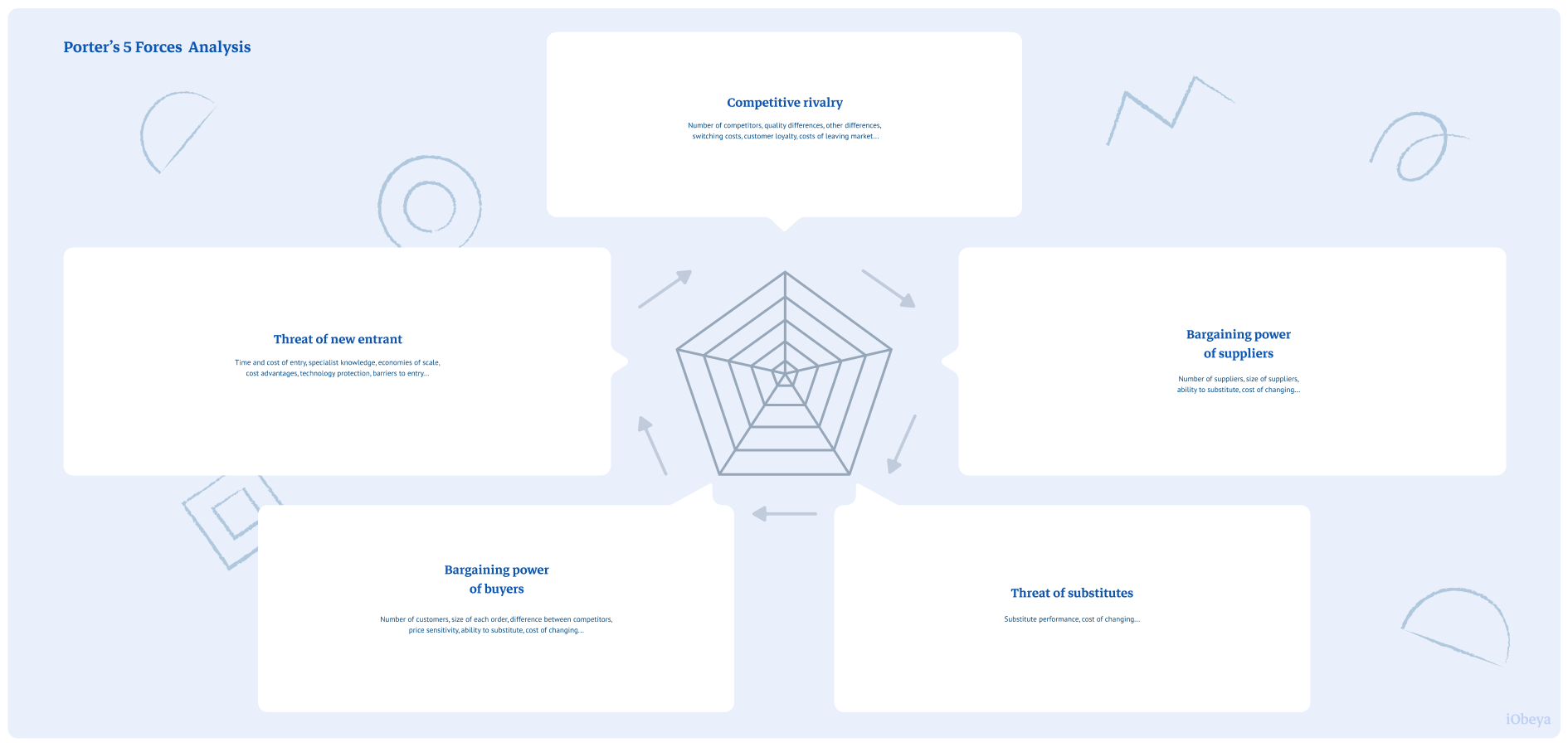
- Select the Porter’s 5 forces board background from the background catalog.
- Add in your tool dock a new set of Notes and rename them according to the different forces.
- Your board is now ready to be used.
Pro Tips on how to set up a Porter’s 5 forces analysis
Don’t hesitate to brainstorm over several sessions. The more time you take to study each of the 5 factors, the greater your overall knowledge of the market will be. If you’re already established in a market, this analysis will allow you to develop and strengthen your competitive advantage. Once you have done your analysis, it is important to regularly review your model in order to be as effective as possible within your company with regards to the ever-changing market.