


Hey, let’s start your
iObeya journey!
In the world of factory management, effective tools and methodologies are crucial for ensuring smooth and profitable operations. The Huddle Meeting or Daily Stand-Up are fundamental rituals for operational teams, ensuring production flexibility and effective responsiveness to events. This article delves into how a Plant Manager can leverage this ritual by integrating visual management boards to address daily challenges and help achieve goals.
The Role of Huddle Meeting in Factory Management
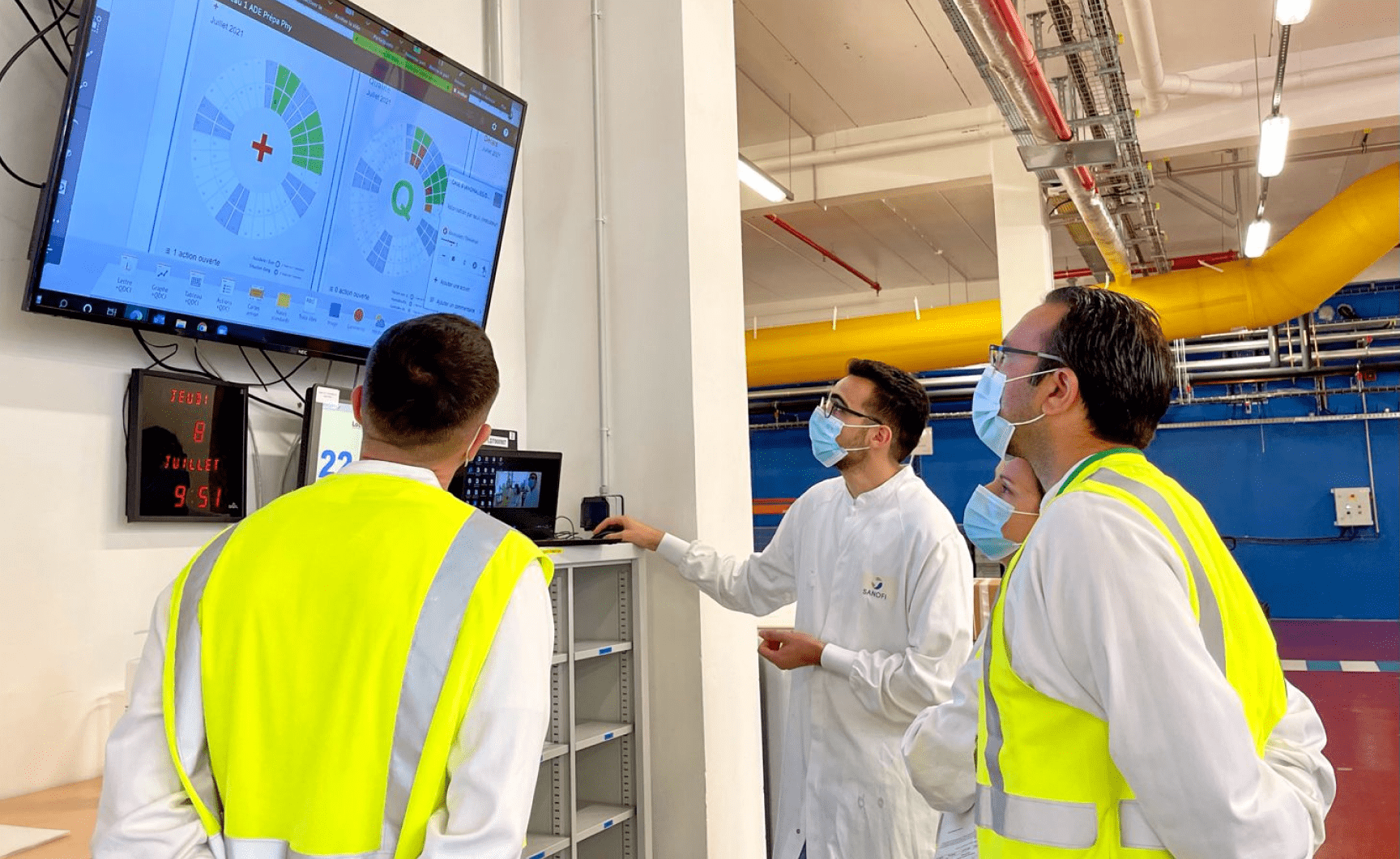
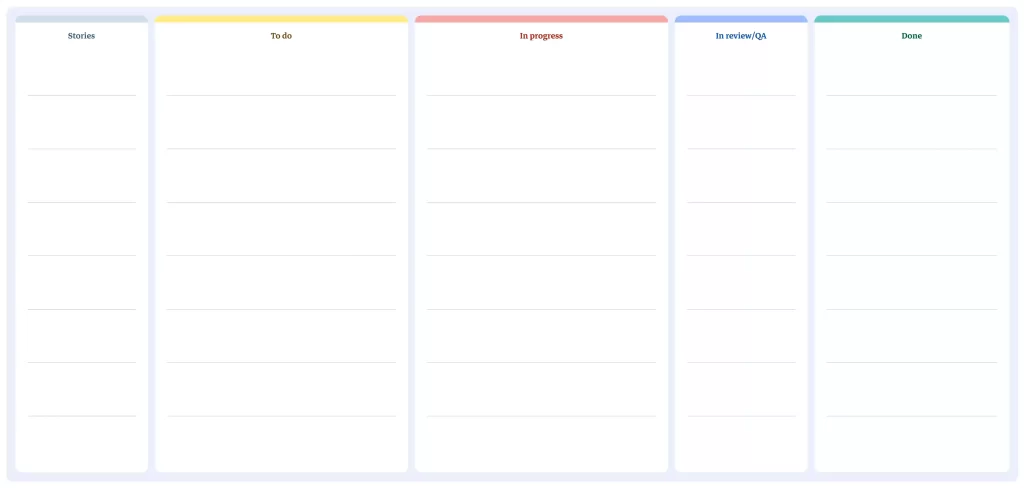
The Huddle Meeting is a brief and regular gathering, often daily, where teams come together to discuss updates and priorities. Unlike formal and extended meetings, Huddle Meetings are designed to be quick (often under 15 minutes), focusing on essential communications to kickstart the day, review performance indicators, events, and actions. Notably, Huddle Meetings are primarily conducted by on-site operators, for example, on the production line using interactive whiteboards à . This ritual also has a more generic term, “Stand-up meeting”, adaptable to various organizational contexts, such as Agile teams analyzing actions defined in Sprint Planning using a Kanban board à with To Do, Doing, or Done phases.
For our Plant Manager, these meetings enhance team cohesion, clarify daily goals, and ensure everyone is aligned and informed.
Concrete examples related to Lean’s mudas include:
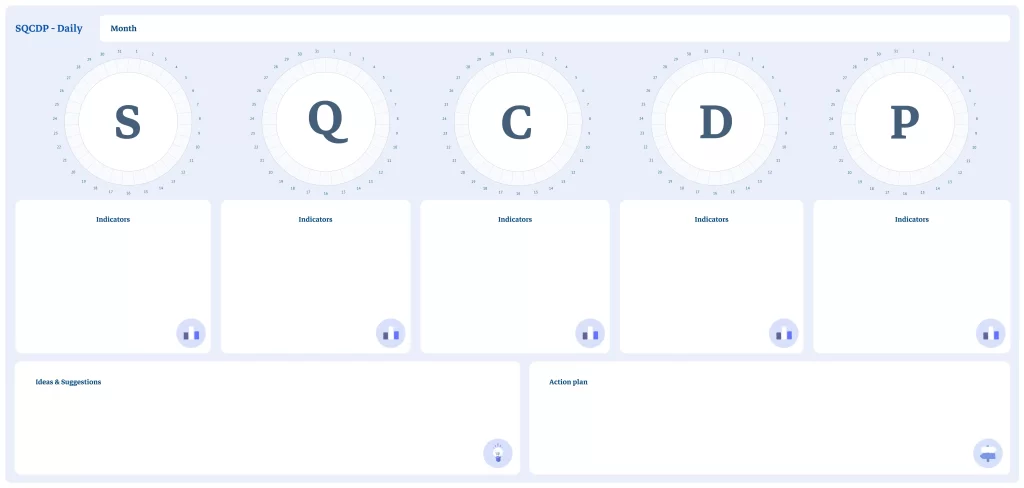
- Using a QCD board coupled with a Kanban board to link operational indicators and address anomalies with ongoing actions (Poka-yoke).
- Visualizing load trends to facilitate proactive problem-solving measures, for instance, in logistics for timely merchandise delivery. With the Huddle Meeting, a Plant Manager can easily organize teams and shifts using Daily Capacity Management (DCM) à in the factory.
Choosing Support for the Huddle Meeting:
The key is to gather production information through visual management. Facts/production indicators are available to identify issues and immediately organize actions. Tools such as the QCD board à and the Kanban board àare excellent solutions. Image captions include “Kanban Scrum Board in iObeya” and “SQCD Daily Board in iObeya.”
Implementation and Benefits for the Plant Manager:
To integrate the Huddle Meeting into your factory management, expert consultants can guide you in building a system to optimize production and organizational responsiveness. The four necessary phases for any organization are:
- Needs analysis and context assessment
- Scope definition, challenges, and change management
- Proof of Concept (POC) / pilot testing
- Deployment and continuous improvement.
Conclusion:
If the ritual aligns perfectly with key times of day, bringing together the right stakeholders with pre-requisite indicators and actions for immediate adaptation, then all elements are in place to effectively boost productivity. It serves as the Minimum Viable Product (MVP) for any further complementary improvements.