


Lean and Operational Excellence share the same objective: to achieve sustainable and managed performance by placing people and value at the heart of the organization.
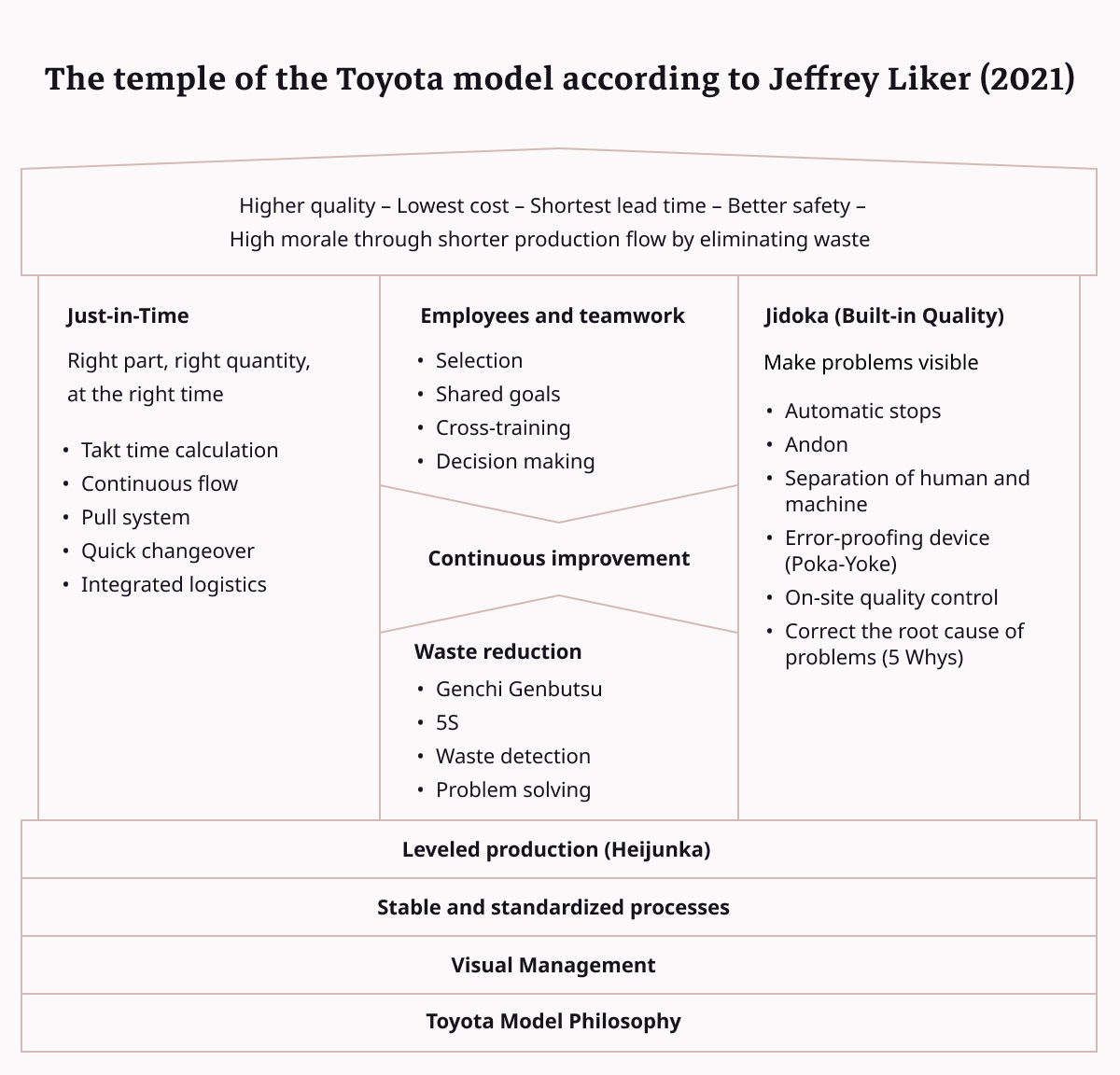
Derived from the Toyota Production System, Lean is a management philosophy founded on process stability, teamwork, and continuous improvement.
These principles aim to optimize the value created for the customer, whose satisfaction is the purpose of the system. It is not just about tools, but about a corporate culture based on accountability, transparency and collective progress.
Operational Excellence, for its part, represents the ultimate goal of this approach. It aims to bring together performance, quality, agility, and employee satisfaction into a coherent and sustainable system. It is the state where each part of the organization functions smoothly, aligned with a common vision, supported by proven methods and a shared culture.
This introduction lays the foundations for our thinking: understanding how Lean culture, through its values and practices, becomes the foundation of Operational Excellence, and why these two approaches are today inseparable in any sustainable performance strategy.
Lean culture and operational excellence: a necessary symbiosis
1. The common pillars that support the symbiosis
- A shared vision and exemplary leadership: Management leads the way and embodies Lean values every day. At Toyota, the leader’s role is to teach and support, not to control. The Lean leader creates an environment where teams can experiment and learn.
- Standardization and continuous improvement: far from being rigid, standardization establishes a stable basis for progress. PDCA cycles and Kaizen do not aim to freeze, but to continuously learn, based on the reality on the ground.
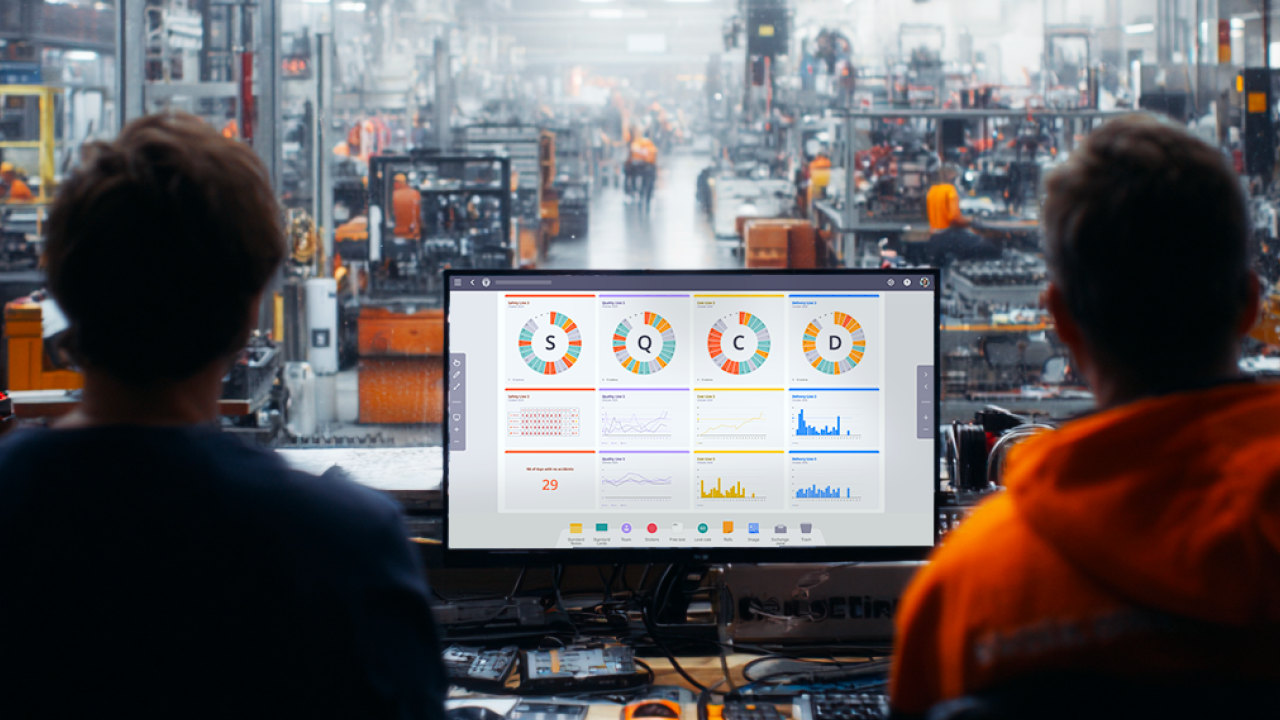
- Performance measurement and management: indicators (KPIs) and visual charts like the SQCDP allow you to visualize performance and drive problem solving. The goal is not to measure in order to sanction, but to make visible progress.
- Autonomy and accountability: in a mature Lean culture, each employee understands their contribution to the overall flow and acts to improve it. This is the key to sustainability: when performance becomes everyone’s business, it ceases to be an imposed objective.
2. Lean tools at the service of Operational Excellence
Tools are not an end in themselves, but they give substance to the culture. Some play a central role in the Lean–Excellence convergence:
- SQCDP (Safety, Quality, Cost, Delivery, People) includes KPIs to measure past performance through visual management and respond to identified deviations. Aligns the team on priorities and promotes communication both horizontally (between teams) and vertically (for upward and downward communication).
- PDCA (Plan–Do–Check–Act): This central Lean tool structures the continuous improvement process.
It is based on four cyclical stages: - Plan: Identify a problem, analyze its causes and define a measurable action plan.
- Do: Implement the plan on a small scale to test the solution.
- Check: measure the results obtained and compare them with the objectives set.
- Act: standardize the solution if it is effective or adjust if necessary before a new cycle.
- VSM (Value Stream Mapping) helps to understand and visualize the flow of a product or service from the arrival of raw materials called “input” to the delivery of the product to the customer called “output”. It highlights all the interactions necessary to manufacture the product requested by the customer
- 5S: method that structures and stabilizes the work environment to guarantee safety, efficiency and quality.
Its name comes from the five Japanese steps:- Seiri (Sort): eliminate what is useless to keep only what is essential.
- Seiton (Store): organize each tool and resource in its place so you can find them immediately.
- Seiso (Clean): Maintain cleanliness to detect anomalies and malfunctions.
- Seiketsu (Standardize): define visual standards to ensure consistency of practices.
- Shitsuke (Discipline): anchor rigor and accountability to perpetuate good habits.
Conditions for success: from posture to sustainability
Exemplary leadership and shared vision
Lean leadership is not a hierarchical role, but a mindset. The leader embodies the vision, facilitates problem solving and creates an environment where everyone can learn. He doesn’t “control,” he “teaches” and “supports.” Toyota speaks of “servant leadership”: someone who shows the way by practicing gemba, by seeing the reality on the ground. This proximity strengthens credibility and support. A clear and shared vision, translated into measurable objectives, ensures consistency between strategy and daily action.
Team Engagement and Recognition
Cross-Functional and Systemic Communication
Lean thrives in an environment where information flows freely. Cross-functional communication breaks down silos, connects departments, and aligns priorities. Visual management, whether physical or digital through iObeya, plays a key role: it makes process status visible and allows teams to quickly adjust their actions. This transparency fosters trust and collaboration, both essential to overall performance.
Performance Measurement and Feedback Culture
To measure is to learn. A Lean organization does not seek immediate perfection but continuous progress. Key Performance Indicators (KPIs) are not tools of control but instruments of dialogue. They promote collective analysis and reflection. The feedback culture turns mistakes into learning opportunities. This ongoing cycle of evaluation and adjustment anchors the system’s sustainability.
In short, the success of a Lean and Operational Excellence approach depends less on methodological rigor than on the organization’s cultural maturity. When leadership is embodied, teams are engaged, and communication is fluid, Lean stops being a project, it becomes a way of thinking and achieving lasting performance.
The Measurable Benefits of a Lean Culture Anchored in the Organization
When an organization successfully embeds Lean culture over the long term, the effects go far beyond simple process optimization. The benefits translate into measurable results across operational, human, and strategic dimensions.
Performance Gains in Quality, Lead Time, Cost, Safety
Rigorous application of Lean principles improves quality and stabilizes delivery times. Teams identify deviations faster, eliminate root causes, and secure flows. The result: more stable processes, controlled costs, reduced waste, and a safer work environment for everyone.
Improved Collaboration and Team Satisfaction
Lean promotes transparency and direct communication. Through visual management and Short Interval Management (SIM) teams share a common understanding of priorities and challenges. This approach strengthens cohesion, reduces tension, and increases job satisfaction. Employees feel heard, valued, and involved in collective success.
Greater Resilience to Change and Crises
A Lean organization learns to adapt continuously. Standardization and feedback loops create a stable yet flexible framework that absorbs disruptions without performance loss. In times of crisis, Lean companies stand out for their organizational agility and ability to respond rapidly while maintaining quality and safety.
Measurable Impact Through Digital Visual Management
Deploying tools such as iObeya amplifies the power of digital visual management: it makes performance clear, dynamic, and shared.
In one second, everyone knows whether the team is on track.
In three seconds, they understand what’s working and what requires attention.
In ten seconds, they decide together on the actions to take.
This transparency strengthens trust, accountability, and responsiveness.
Data is no longer just an indicator — it becomes the engine of collective, visible, and daily progress.
Inspired by the visual performance management principles described by McKinsey & Company in “Getting Visual Performance Management Right.”
Creation of a culture of collective learning and continuous innovation
Finally, a mature Lean culture fosters an environment conducive to innovation. By valuing experimentation and the right to make mistakes, it transforms the organization into a learning system. Ideas emerge from the field, improvements flow naturally, and the company develops a genuine competitive advantage based on its ability to learn faster than others.
Lean Culture as a Driver of Overall Performance
Operational Excellence is not a destination but a way of operating. It is built daily through behaviors, decisions, and collective learning. It is a living dynamic, sustained by Lean culture, where every local improvement contributes to global performance.
Lean is no longer a toolbox or a short-term efficiency project; it becomes a shared culture, a common language connecting teams, functions, and hierarchical levels. By integrating digital tools, this culture gains reach and responsiveness. Collaborative platforms such as iObeya make flows, problems, and results visible, allowing everyone to act based on concrete, shared data.
The true challenge lies in the emergence of a human-centered Lean 5.0, where technology supports responsibility, sustainability, and quality of life at work. This approach places people back at the heart of transformation; not as a link in the process, but as its driving force. It is in this alliance between efficiency, innovation, and purpose that organizations build lasting and holistic performance.
