
Why iObeya
What if a control point misses at 10:00, and nobody outside the team knows until the 14:00 review? At that time the interval that was meant to correct it has already closed. iObeya puts the handover, the hourly numbers, the open deviations and the actions on one up-to-date board, so the miss is visible the moment it is logged. And it reaches the tier that can act while there is still time to act. On the Digital Obeya Platform™.
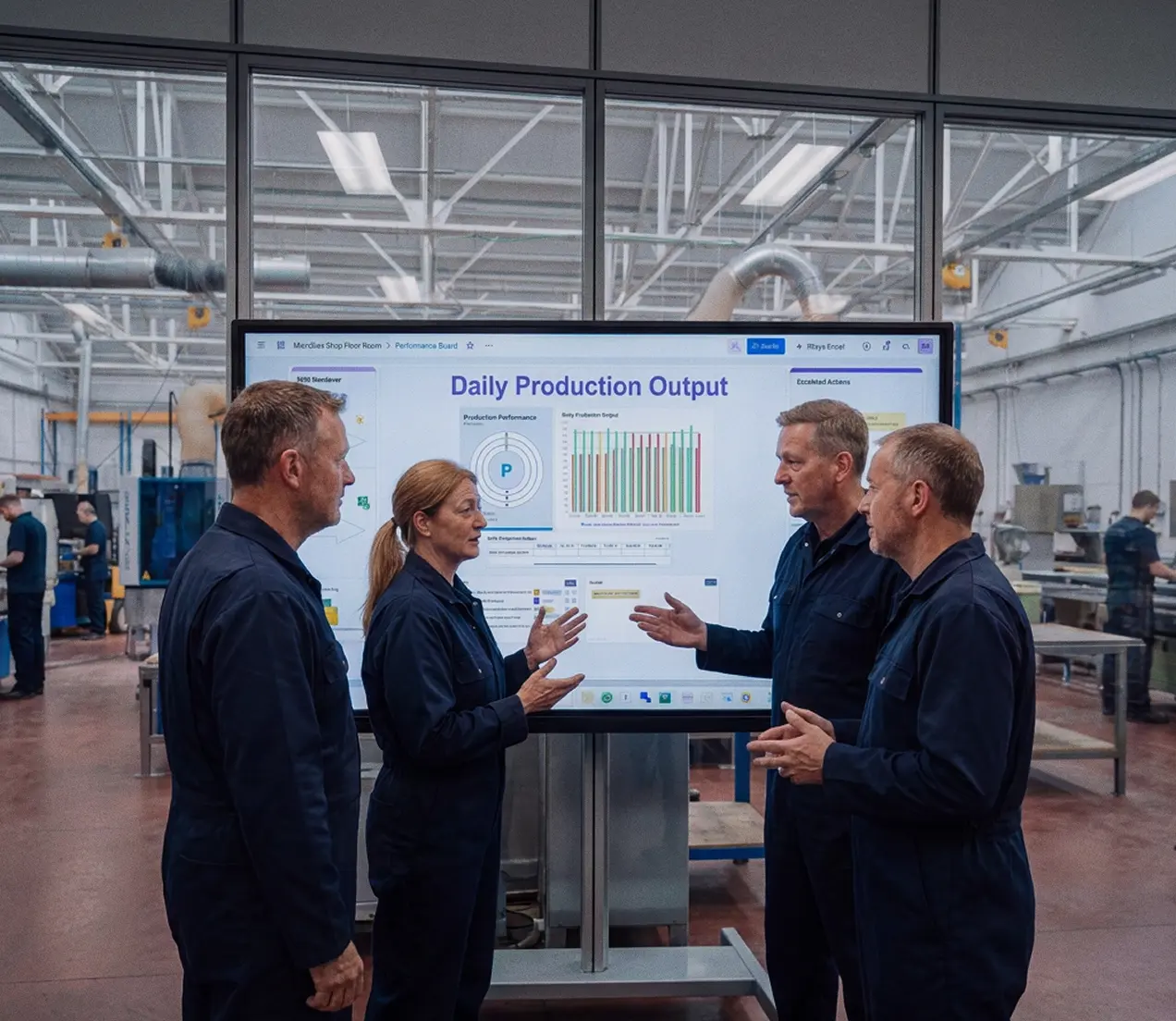
Short interval management software runs the short-cycle performance review a team holds at a fixed interval, hourly or once a shift, called SIM or SIC in English and AIC at French sites. It carries the target, the actual, the deviations raised against them and the actions that follow, on one board the team updates where it stands.
The management discipline: steering the line at a short, fixed cadence rather than reviewing it after the fact.
The same practice named after its mechanic: check the control point, catch the miss, correct inside the interval.
The interval is the practice's one real design choice: an hour, a shift, a logistics wave. Set it too long and the problem outlives the loop meant to correct it. Everything else on the board inherits from that single decision.
Team leaders and frontline supervisors on production lines track performance. Department and plant management reads the same record one or more tiers up. On touchscreens at the team's location, on a tablet while walking the line, on a PC at the desk.
A reporting tool tells you the hour missed its target. SIM software is where the team works the issue: the gap becomes a card with an owner and a date, in the same view as the plan the missed target broke.
Almost every site already holds the review. What breaks is the gap between two meetings: the wall stops being true the moment the group leaves, and anything the team cannot fix itself gets re-typed by hand before the tier above hears about it.
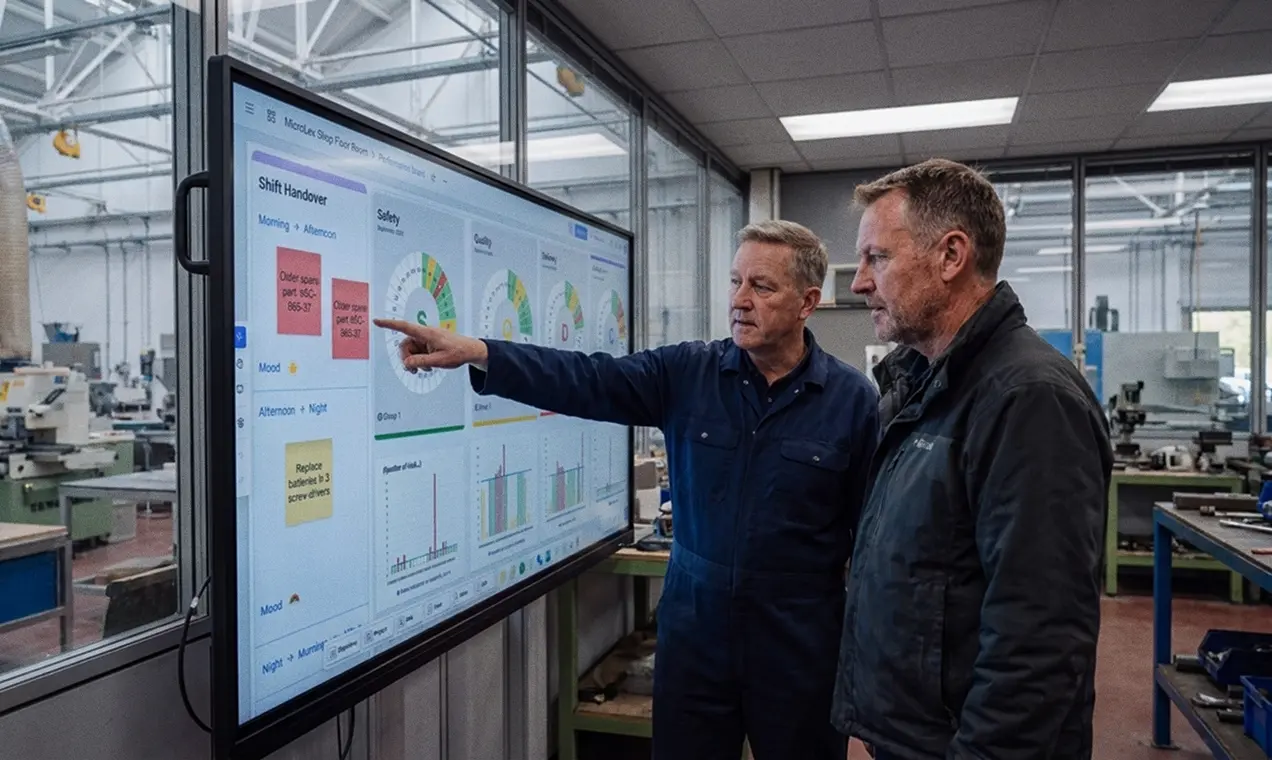
Open the shift on the board the outgoing team just closed. Everything still open is already on it, with its history, its owner and the hour it was raised.
Each incoming team starts on the real state of the line rather than reconstructing it, which is usually the first fifteen minutes of the shift returned.
Before this, the handover was a verbal summary and a page of notes, so whatever the outgoing supervisor forgot to mention simply did not exist for the next twelve hours.
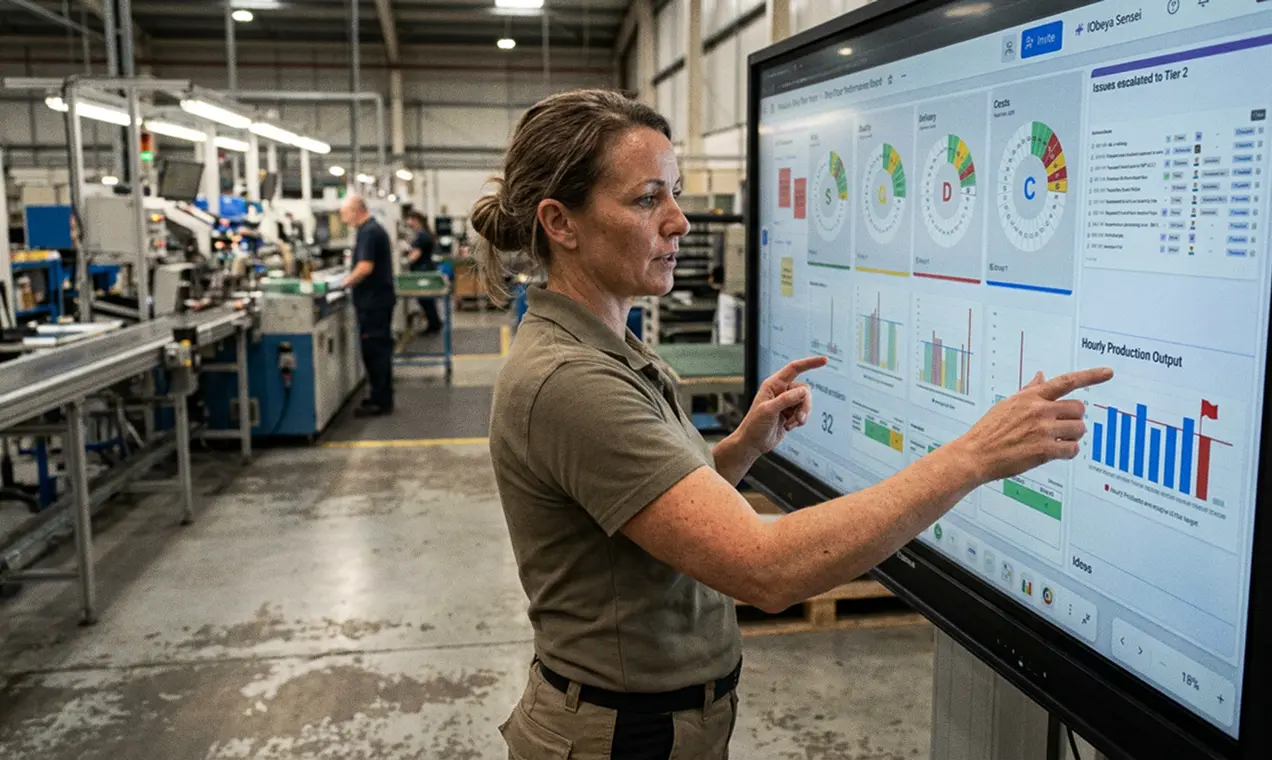
The count for the interval sits directly beside the target it is measured against, updated on the board where the team stands rather than in a file somebody consolidates later.
When the gap opens at 10am it is visible at 10am, which is the only version of this practice that deserves the word short.
Nobody has to wait for an end-of-shift report to learn that hour four went wrong, and nobody has to defend a number that was typed twice on the way to the meeting.
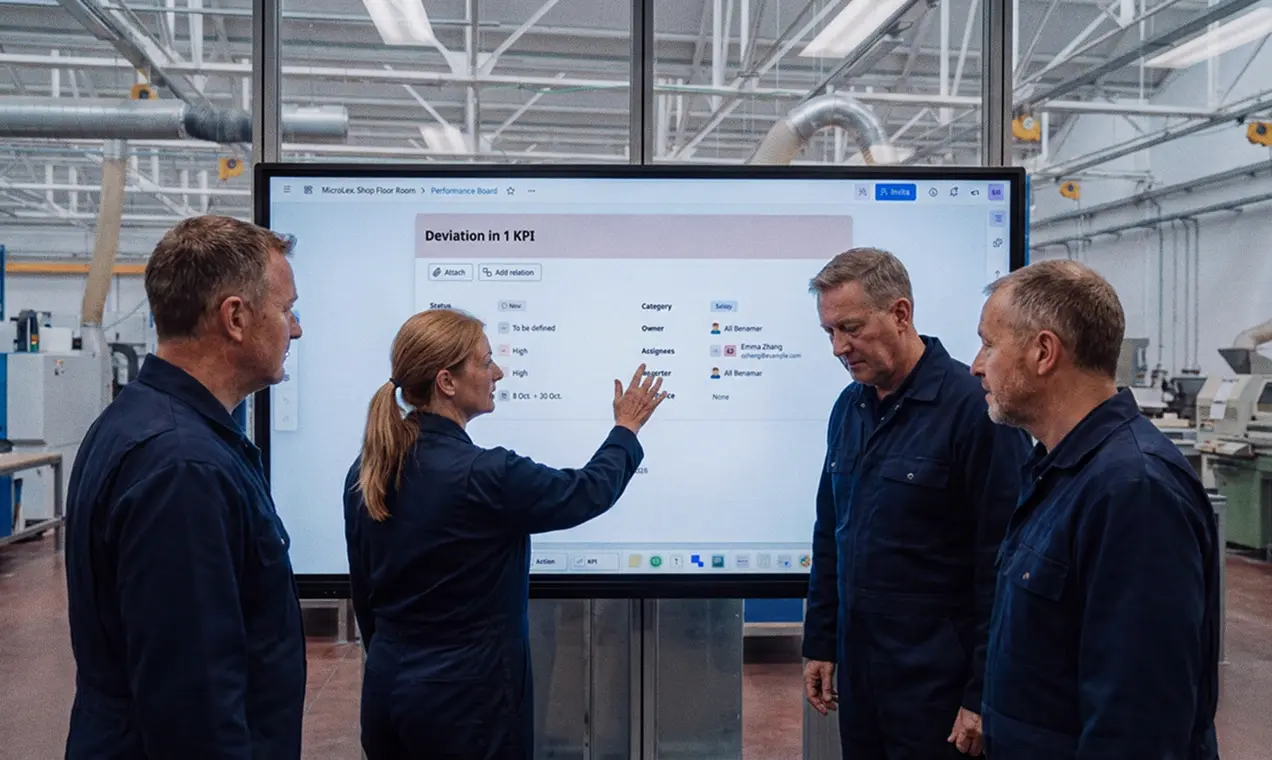
When actual falls behind plan, the team raises an issue card against the indicator that moved, describing the condition it found and nothing more.
The condition is on the record before anyone proposes a fix, so the pattern is still readable a month later when someone asks why this line keeps stopping.
Without a card, a deviation lives in one person’s memory and competes with everything else in it, which is why the same failure gets discovered four times before anyone counts it twice.
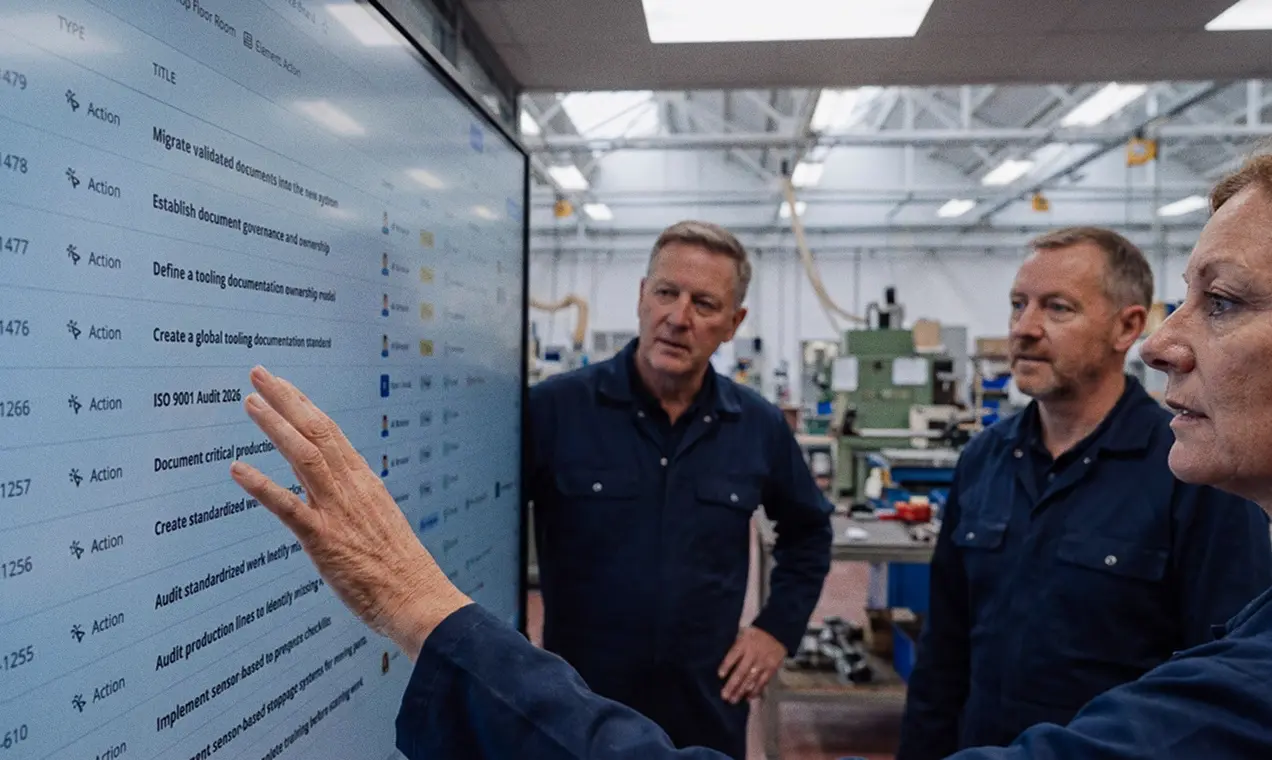
Each issue card that needs work becomes an action card carrying an owner, a date and a link back to the deviation that caused it.
Close it in the same place it was raised, in front of the team that raised it, so closure is something the room sees rather than something it is told.
Paper did the opposite: it separated them. The problem stayed on the wall and the action went into a list somebody else maintained, and the two were never reconciled again.

Behind each board sits a template that fixes the sequence, the indicators, the card types and who speaks to which of them, so the review does not change shape depending on who is chairing it.
Shift after shift, the same eight minutes cover the same ground in the same order, which is what makes the interval short enough to be worth holding.
If the standard only lives in one supervisor’s head, the review is only ever as good as whoever turned up to run it, and it degrades quietly the week they are on leave.
“We create the conditions on the shopfloor that allow teams to see problems, visualize gaps, and engage through rituals.”

Vaillant
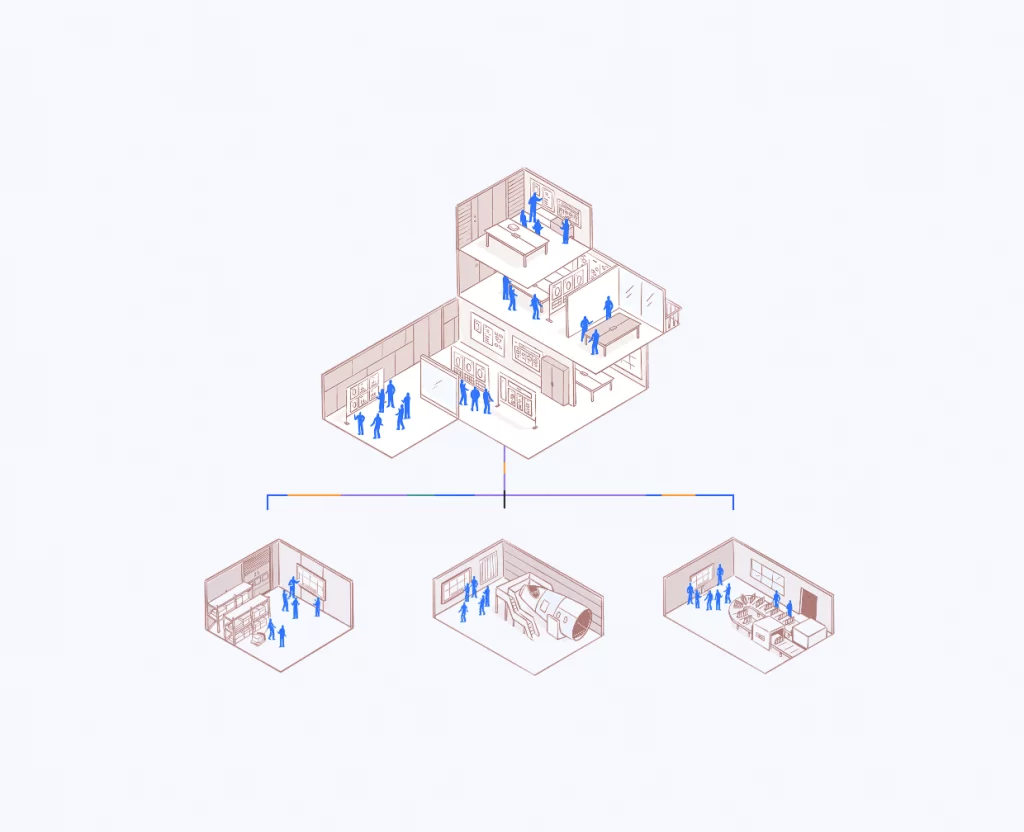
Tiered daily management works when the same object travels upward. In iObeya, a card the line could not close inside its own interval becomes visible on the tier above it carrying its original wording, its indicator, its owner and its age. Nobody rewrites it into a summary, and nobody at the plant review is looking at a paraphrase of a paraphrase.
The direction matters as much: the decision taken above lands back on the card the team raised, in the room where they raised it. So a frontline supervisor can see that their escalation was answered without asking anyone whether it was.
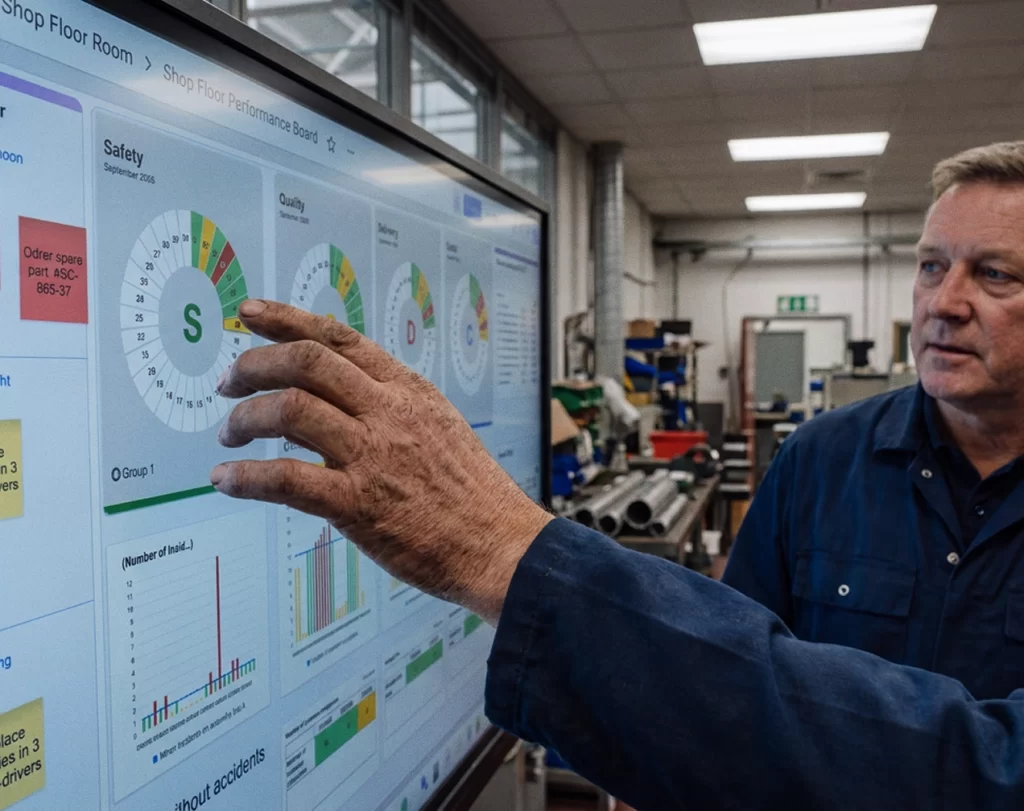
Most short interval control software assumes somebody is sitting at a keyboard. A short interval review does not happen at a desk. It happens for eight minutes beside a running line, with gloves on, and it either fits into that or it quietly reverts to paper within a month while the licence keeps renewing.
iObeya boards are built for the hand: large touchscreens at standing height, cards moved by finger, the same board opening on a tablet carried along the line. The team writes on it because writing on it is faster than not, which is the only adoption mechanism that has ever survived a difficult shift.
Leader standard work software is usually bought site by site, and when the organization wants to consolidate, it cannot answer a simple question: is the review in Lyon the same review as the one in Leipzig? In iObeya the structures, indicator definitions and card types are governed once at group level and inherited by every room, so the answer is yes by construction rather than by audit.
This makes practices comparable, which is what a collection of site tools cannot give you. Two plants running the inherited structure produce records that mean the same thing, so an improvement found in one is portable to the other instead of being a local anecdote. Local differences still fit: a site adds indicators the group does not track, in its own language, without breaking what it inherited.

VPS coach
VPS coach

Logistics & Supply Chain
Logistics & Supply Chain
A short review run at a fixed interval, usually every shift or every few hours, where the team compares actual output against plan, raises what has gone wrong, and assigns the work to fix it. The point is to catch a problem inside the interval rather than at month end.
They describe the same practice from two angles. SIM is the management discipline of steering at a short interval. SIC is the control loop itself: measure, compare, react, before the interval closes. Most sites use whichever term their improvement programme adopted and mean the same practice by it.
Frequently enough that a problem cannot survive undetected until the next one. On a production line that is often hourly or twice a shift. In logistics it commonly follows the wave. The interval is a design decision about how long you can afford to be wrong.
No, and most sites start on paper. Paper breaks in three places: the board stops being true the moment the team walks away, an escalation has to be retyped to reach the next tier, and a second site invents its own version of the standard.
A handover is one part of it. Handover transfers open problems across a shift boundary. Short interval management is the wider loop that also compares output to plan inside the shift, records deviations as they appear, and tracks the resulting actions to closure.
When a team cannot resolve something inside its own interval, the card raised at the line becomes visible on the tier above, carrying its history, its owner and its numbers. Nothing is re-summarized, so the plant review sees the original record.
Yes. The boards are built for large touchscreens where the team already stands, operated by hand at standing height, and open from a tablet on the line or from a desk. Nobody needs to be sitting down to update or read the current state.