


Whether physical or digital, an Obeya room is built to make complex situations readable at a glance.
Yet for all its promise, Obeya is often harder to get right than it looks. Many teams set up boards, schedule weekly stand-ups, and still find themselves stuck in the same silos, the same slow loops, the same disconnected conversations. Something is always slightly off, but it is not always easy to name.
The good news is that most Obeya struggles come down to a handful of recurring patterns. And nearly all of them are fixable without starting from scratch. Here is what to watch for and how to course-correct quickly.
What Makes an Obeya Effective
Before diving into the mistakes, it helps to get clear on what a well-functioning Obeya actually looks like. At its core, an Obeya is a management system, not a decoration exercise. Its purpose is to give leaders and teams a shared view of reality: where the strategy is heading, how execution is tracking, and where things need attention.
Good visual management in an Obeya room means that anyone walking in can quickly understand the situation without needing a lengthy briefing. The boards tell a story. The metrics connect to the strategy. The conversations that happen there are focused, action-oriented, and short enough to respect everyone’s time.
When Obeya works, strategy alignment stops being a quarterly exercise and becomes a living weekly rhythm. Decisions that used to take weeks get made in minutes. Teams stop working in isolation because the Obeya makes interdependencies visible and creates shared accountability. That is the standard to measure against.
Common Obeya Mistakes
Treating the Obeya Room as a Meeting Room
This is the most common mistake, and it quietly hollows out the entire practice. When teams start using the Obeya room to host regular project reviews, ad hoc workshops, or meetings that have nothing to do with operational performance, the space loses its identity. People stop associating it with focused management routines and start treating it like any other conference room with nicer walls.
The Obeya room is not a meeting room. It is a dedicated environment for structured management rituals around strategy, performance, and problem-solving . The boards on the walls only carry meaning if the conversations that happen in front of them are consistently tied to those topics.
The fix is simple but requires discipline. Define a clear charter for your Obeya room: which management routines belong there, who participates, and what kinds of decisions get made in that space. Post those rules visibly and protect the room from drift. If you are working with a digital Obeya, the same logic applies. Your virtual space needs a clear scope so it does not become a catch-all for every team call.
Too Many KPIs and Too Much Information
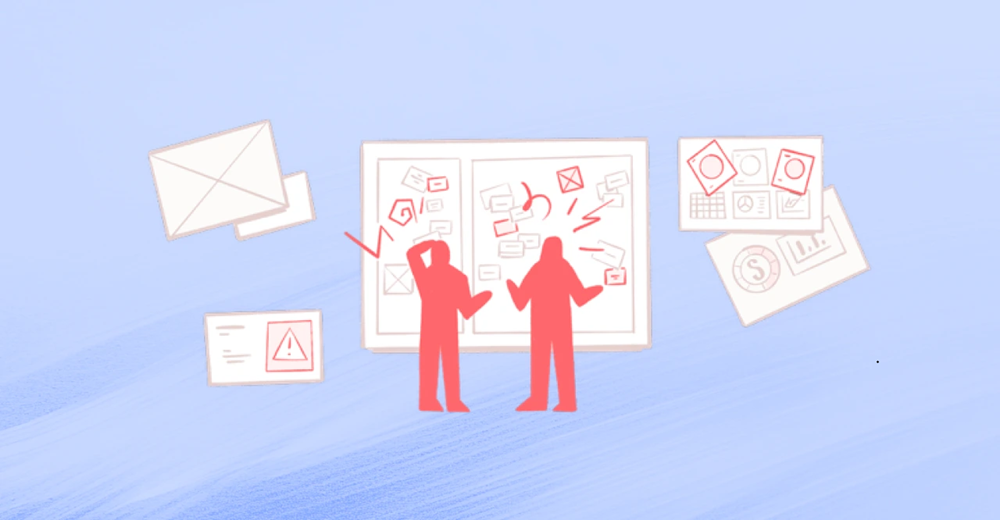
There is a temptation to fill boards with every metric available. The logic seems sound: more data means better decisions. In practice, it creates the opposite effect. When everything is visible, nothing stands out. Teams spend Obeya meetings scanning walls instead of acting on what matters.
Overloaded boards are usually a sign that the team has not yet made the hard choices about what actually drives operational performance. Every indicator feels important until you ask the right question: if this metric turns red today, does it change what we do this week? If the answer is no, it probably does not belong on the main board.
A practical way to cut through the noise is to apply that filter to every KPI on your boards right now. Anything that does not trigger a decision gets moved to a secondary view or a report rather than prime wall space. Lean management has always favored clarity over completeness. Aim for five to seven meaningful indicators per panel, not fifteen.
Static Boards That Are Never Updated
An Obeya board that reflects last month’s reality is worse than no board at all. It creates a false sense of control while quietly eroding trust. Teams learn very quickly to ignore boards that are not maintained, and once that habit forms, it is genuinely hard to reverse.
Stale information is almost always a symptom of one of two things: the update process is too manual and too time-consuming, or ownership of the boards has never been clearly assigned. When nobody owns a panel, nobody updates it.
Assign a named owner to each board panel, not just a team. That person is accountable for keeping their panel current before each Obeya meeting . If updates are consistently taking too long, look at automation. Digital Obeya tools can pull live data directly into boards, removing the manual refresh cycle entirely and keeping visual management genuinely up to date.
Lack of Clear Facilitation
A group of smart people standing in front of well-designed boards will not automatically have a productive Obeya meeting. Without a clear facilitator and a structured agenda, conversations drift, the loudest voices dominate, and the session ends without clear decisions or named owners. Everyone leaves wondering what just happened.
Poor facilitation is one of the main reasons teams feel their Obeya is consuming time without delivering value. The meeting feels shapeless. After a few sessions like that, people start arriving late, skipping mentally, or quietly questioning whether the whole practice is worth it.
Appoint a dedicated facilitator for each session whose role is to guide the room through the boards in a fixed order, time-box each topic, and surface decisions explicitly. A well-run Obeya meeting moves panel by panel, stays within 30 to 45 minutes, and ends with a written list of decisions and owners. That kind of structure is not bureaucracy. It is precisely what makes the meeting worth holding week after week.
No Link Between Strategy and Execution
This is the deepest mistake, and also the hardest to notice from the inside. Many Obeya rooms are beautifully set up at the operational level (tracking delivery, quality, and performance) but completely disconnected from strategic priorities. Teams are executing well, just not necessarily on the things that matter most to the organization right now.
Without strategy alignment, the Obeya becomes a performance monitoring tool rather than a genuine management system. It tells you whether teams are delivering. It does not tell you whether what they are delivering actually serves the direction the organization is trying to move in.
Adding a strategic layer does not require a sophisticated system. One board panel showing the top three to five strategic priorities for the period, with a simple visual mapping them to current operational work, is enough to create the link. Once that connection exists, every Obeya meeting can check not just whether execution is on track, but whether it is heading in the right direction.
Quick Fixes to Improve Your Obeya Immediately
If your Obeya is not delivering the results you expected, you do not need to start over. Most improvements can be made within a single week. Here is where to focus first.
- Walk through your boards right now and ask honestly: is every piece of information here still true? Remove or archive anything outdated. A smaller, accurate board is always more useful than a full, stale one.
- Put a name next to each board panel. Not a team name, a person’s name. Shared ownership is no ownership in practice.
- Run your next Obeya meeting with a strict panel-by-panel agenda and a timer. Notice how much faster and sharper the conversation becomes when there is a structure to follow.
- Cut your KPI count to the five indicators that most directly drive decisions. Move everything else to a secondary reference document that people can consult when needed.
- Add one strategy panel. Even a simple visual showing the top priorities and how current work connects to them will change the quality of every Obeya conversation going forward.
Turning Your Obeya into a Real Management System
An Obeya is not a room. It is not a set of boards. It is a living management system that keeps strategy and execution in constant dialogue. When it works well, it is one of the most powerful tools available to Lean leaders, project managers, and transformation teams trying to move faster without losing sight of what matters.
The mistakes covered here are not signs that Obeya is the wrong approach. They are signs that the practice has not yet taken root as a genuine management rhythm. Every one of them is correctable, and most can be addressed without a large investment of time or money.
The teams that get the most out of their Obeya treat it as a continuous improvement practice in itself. They regularly step back and ask: is this board helping us make better decisions? Is this meeting generating real action? When the answer is no, they adjust. That willingness to keep improving the system, not the size of the room or the number of boards, is what makes Obeya stick.
One last tip for leaders just getting started: Start small and stay focused. Pick one management routine, one set of boards, and one team. Run it consistently for four weeks before expanding. The goal is not to have the most impressive Obeya room in the building. It is to build a habit of shared visibility and structured decision-making. Once that habit exists, everything else becomes much easier to layer on top.
