
Why iObeya
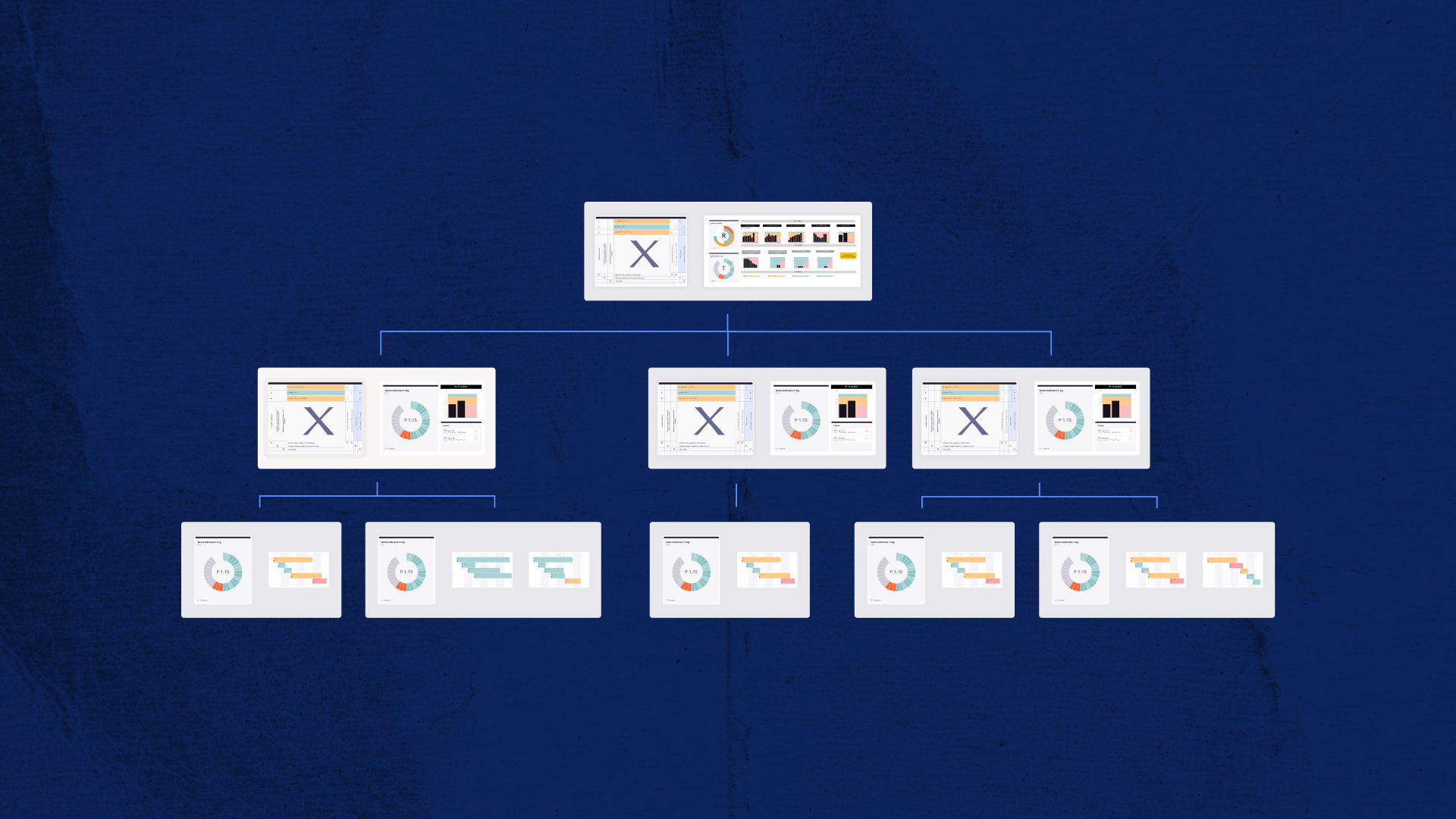
Too often, the Obeya is mistaken for a giant dashboard. You walk into a room filled with charts, post-its, and frozen KPIs… but with no real discussion happening. It’s the classic trap of “command and control” disguised as visual collaboration . Information is displayed to prove that things are being managed, but without asking the right questions or addressing the real problems.
Yet the Obeya was never meant to be a reporting tool. It was born within Toyota’s Lean system to create collective intelligence, structure dialogue across teams, and enable cross-learning. Its purpose is to make visible what is normally invisible in daily operations: the forgotten connections, the underlying tensions, the gaps between strategy and reality. In short, it helps teams think together in service of the customer.
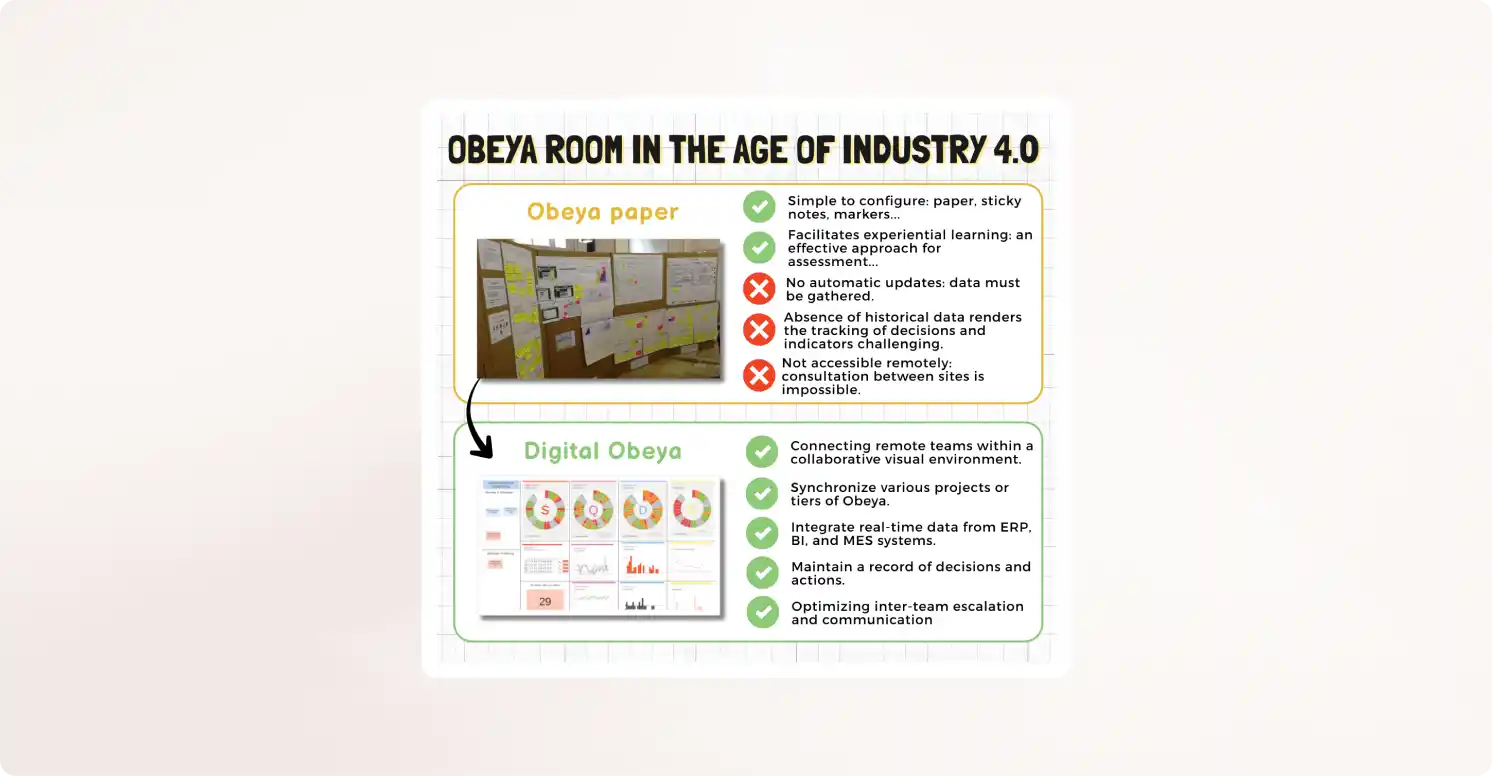
Visual management first emerged through physical tools: paper, post-its, markers, magnetic boards. This physicality is extremely valuable during the learning phase you test, adjust, manipulate, and iterate. But as organizations grow, globalize, and shift to hybrid ways of working… physical tools reach their limits.
But remember: digitalizing is not “copying paper onto a screen”. It’s an evolution of the practice that must remain faithful to Lean principles.
The Obeya is not a miracle tool. It is a demanding practice requiring rigor, clarity, listening, and managerial courage. But when used correctly, it radically transforms the quality of discussions and decisions. It helps teams move past political games, blind management, and siloed responsibilities.
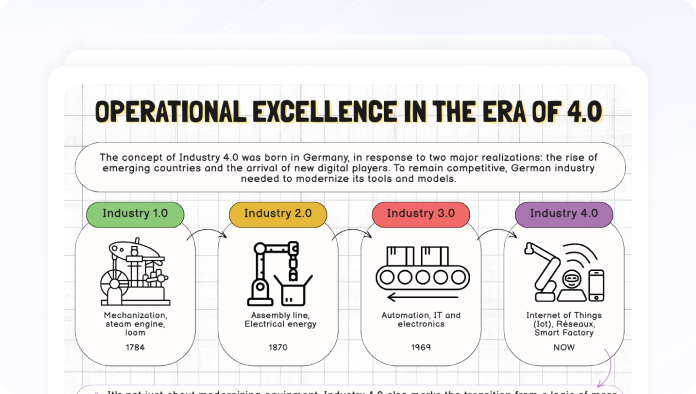
Digitalizing the Obeya is a lever in service of a larger intention: creating the conditions for strong alignment, collective reactivity, and continuous learning. In that sense, it remains more than ever a core pillar of Lean in the era of Industry 4.0.