


- Home
- Lean Corner
- Why digitize your Gemba Walk?
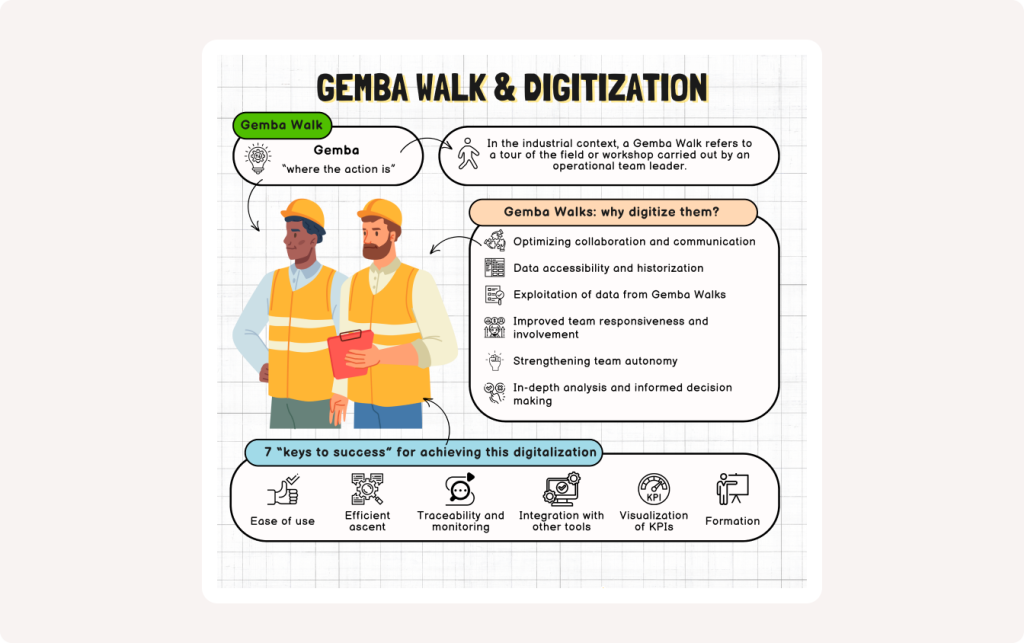
In the industrial sector, as we know, operational efficiency is paramount. To achieve this efficiency, it’s necessary to improve processes, which means understanding the root causes of problems.
The solution? Gemba Walks. Stemming from the lean philosophy, they have become an essential tool for managers wishing to keep in touch with the field and understand the “real causes”. In this article, we explore why and how to digitize Gemba Walks, while preserving their essence: human contact with operational teams.
What is Gemba Walk?
This exercise should be seen not simply as an inspection, but as an opportunity to observe, listen and learn. During these tours, the manager can:
- Analyze processes in depth
- Identify deviations from established standards
- Identify best practices worth sharing
- Detect operational problems that are holding back productivity
- Strengthen links with teams and stimulate their autonomy
A well-conducted Gemba Walk always concludes with a constructive exchange between the manager and the teams concerned. It’s an opportunity to share observations, validate perceptions and initiate improvement actions.
I invite you to read about the best practices of Gemba Walks.
Now that we’ve got the basics right, let’s take a look at why and how to digitize the Gemba.
Reasons to digitize Gemba Walks
Optimizing collaboration and communication
Data accessibility and archiving
One of the major advantages of digitalization is the ability to keep a detailed history of Gemba Walks. This traceability not only provides an overview of how processes are evolving, but also enables action plans to be adjusted more precisely and efficiently.
For sectors subject to frequent regulatory audits, such as the agri-food or aeronautics industries, this digital archiving can prove particularly valuable.
Exploiting Gemba Walks data
Recording data from routines enables us to directly calculate the performance indicators (KPIs) we wish to track, which can then be monitored via dashboards. You can then easily update the status, progress or score of audits and field tours daily.
What’s more, you can export the history of responses given during routines performed by your teams, for customized analyses.
Improve team responsiveness and involvement
Increased team autonomy
In-depth analysis and informed decision-making
A practical guide to successfully digitizing Gemba Walks
Ease of use
Efficient reporting of problems in the field
An interesting feature: The ability to create a ticket directly from the application, linked to the routine in progress, greatly facilitates the follow-up and resolution of identified problems.
Traceability and action tracking
Integration with other performance management tools
Visualization of key indicators
Flexibility and customization
Training and support
By following these 7 “keys to success”, you’ll be able to digitize your Gemba Walks effectively, while preserving the very essence of this practice: direct contact with the field and operational teams.
By choosing your tools wisely and involving your teams in this transition, you can not only optimize your processes but also reinforce the culture of continuous improvement within your organization.
The key to success lies in the balance between technology and human contact.


- 20 minute listen

- 5 minute read

- 6 minute read